Shipping
Same-day shipping on USA orders placed before 2PM EST.
View Shipping Policy →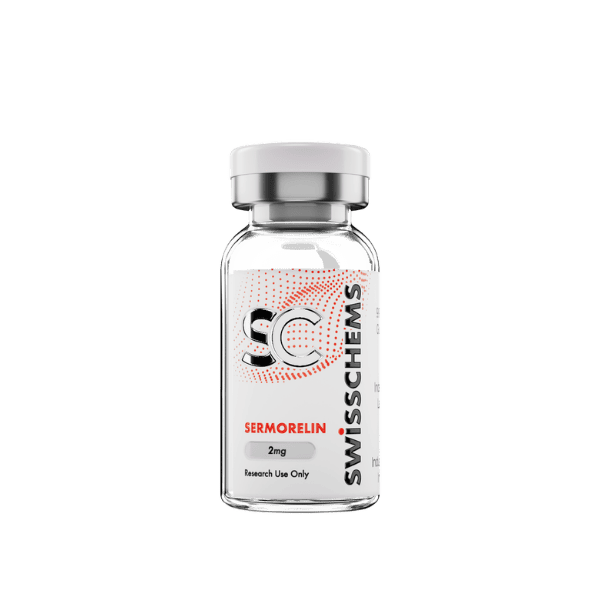
SKU: SERMRLN2M

Same-day shipping on USA orders placed before 2PM EST.
View Shipping Policy →30-day hassle-free returns on unopened products.
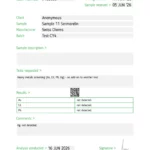
View Returns Policy →Every batch is tested for purity, potency and quality.
View Lab Results →Have a question? Our team is here to help you.
Contact Us →Sermorelin (GRF 1–29) is a synthetic 29-amino-acid fragment of endogenous GHRH(1–44), representing the minimal active sequence required for full GHRHR agonist activity. GHRHR binding activates Gsα-coupled adenylyl cyclase, stimulating pulsatile GH release from anterior pituitary somatotrophs. Research applications include GHRHR pharmacology, somatotropic axis characterisation, and comparative GHRH analogue potency studies.
| Chemical Formula | C151H250N44O44S |
|---|---|
| Synonyms | UNII-89243S03TE, 89243S03TE, Sermoreline, Sermorelinum, Growth Hormone Releasing Factor (GRF) (1-29) amide |
| Molar Mass | 3417.9 g/mol |
| CAS Number | 114466-38-5 |
| PubChem CID | 16132412 |
| Total Compound Content | 2 mg per vial |
| Shelf Life | 36 months |
Sermorelin is a synthetic 29-amino-acid fragment of the first 29 residues of endogenous human GHRH(1–44). Studies established that GHRH(1–29) retains full GHRHR agonist potency relative to the intact 44-residue peptide, as the N-terminal region contains the receptor-binding and activation domain. Sermorelin is therefore functionally equivalent to GHRH in terms of GHRHR pharmacology, though the shorter length confers a slightly shorter plasma half-life.
Sermorelin has a plasma half-life of approximately 10–20 minutes due to DPP-IV cleavage vulnerability. Tesamorelin (N-terminal trans-3-hexenoic acid modification) extends this to approximately 26–38 minutes. CJC-1295 without DAC (GRF 1–29) uses substitutions at positions 2, 8, 15, and 27 to provide DPP-IV resistance (t½ ~30 min), and CJC-1295 with DAC covalently binds albumin (t½ ~7–8 days). Sermorelin's shorter half-life makes it appropriate for studies requiring discrete, acute GH pulse induction.
Sermorelin possesses one of the most extensively characterized pharmacological profiles among GHRHR agonists, with well-documented receptor binding properties, signaling activity, and ligand-receptor interaction data. Its defined structure, established receptor affinity, and thoroughly studied activation mechanisms have made it a widely used reference compound for investigations involving GHRHR pharmacology, receptor activation kinetics, structure-activity relationships, and comparative analyses of GHRH analogues. As a result, Sermorelin is frequently utilized as a benchmark molecule in studies examining receptor signaling, ligand optimization, and GHRHR-mediated signal transduction.