Shipping
Same-day shipping on USA orders placed before 2PM EST.
View Shipping Policy →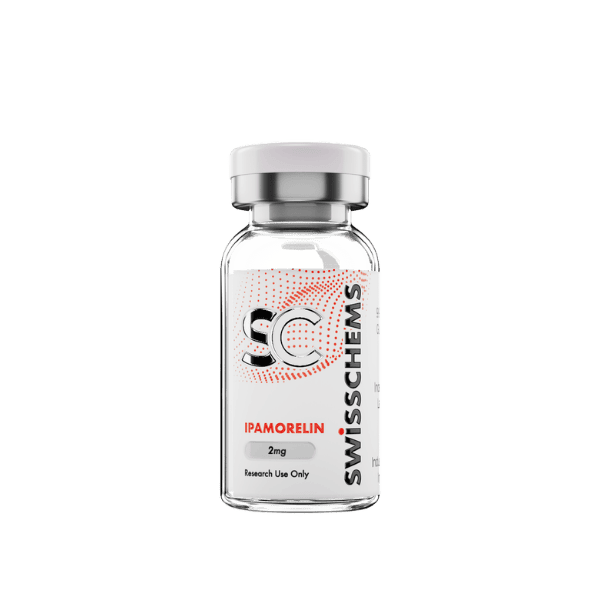
SKU: IPAMRLN2M

Same-day shipping on USA orders placed before 2PM EST.
View Shipping Policy →30-day hassle-free returns on unopened products.
View Returns Policy →Every batch is tested for purity, potency and quality.
View Lab Results →Have a question? Our team is here to help you.
Contact Us →Ipamorelin is a synthetic pentapeptide and highly selective agonist of the growth hormone secretagogue receptor subtype 1a (GHS-R1a). The compound is characterized by strong receptor selectivity and a well-defined pharmacological profile, making it a useful tool for investigating GHS-R1a-mediated signal transduction and ligand-receptor interactions. Research applications include GHS-R1a pharmacology, receptor activation kinetics, signaling pathway characterization, structure-activity relationship investigations, and comparative analyses of growth hormone secretagogue receptor ligands.
| Chemical Formula | C38H49N9O5 |
|---|---|
| Synonyms | 2-Methylalanyl-L-histidyl-3-(2-naphthyl)-D-alanyl-D-phenylalanyl-L-lysinamide, 170851-70-4, C38H49N9O5, CHEMBL58547, SCHEMBL183305, SCHEMBL8169698, MolPort-039-139-953, 5020AF, ZINC29562299, AKOS030573449, DB12370, NCGC00167295-01, FT-0696037 |
| Molar Mass | 711.9 g/mol |
| CAS Number | 170851-70-4 |
| PubChem CID | 9831659 |
| Total Compound Content | 2 mg per vial |
| Shelf Life | 36 months |

Ipamorelin is characterized by a highly selective interaction with GHS-R1a and a well-defined pharmacological profile relative to earlier growth hormone secretagogue receptor ligands. This selectivity makes it a valuable research tool for investigating GHS-R1a-mediated signaling pathways, receptor activation kinetics, and ligand-receptor interactions without the broader receptor activity observed with less selective secretagogues.
Pharmacokinetic investigations have reported a relatively short elimination profile compared with longer-acting GHS-R1a agonists. This characteristic makes Ipamorelin useful for studies examining receptor engagement dynamics, activation kinetics, signal transduction timing, and the temporal aspects of GHS-R1a-mediated signaling.
Ipamorelin and GHRH analogues interact with distinct receptor systems and signaling pathways. Ipamorelin acts through GHS-R1a, whereas compounds such as CJC-1295 and Sermorelin target the growth hormone-releasing hormone receptor (GHRHR). Comparative investigations utilize these compounds to examine differences in receptor activation mechanisms, downstream signaling architecture, ligand selectivity, and pathway-specific signal transduction.